Home Movement
Practice
A considered collection of bodyweight routines, interval structures, and mobility sequences — built around the rhythms of daily life in a home setting, without the need for specialist equipment.

Six Approaches to Home Fitness
Each discipline has its own cadence and logic. Eldan maps them into a daily movement practice without hierarchy or instruction.
Bodyweight Fundamentals
Squats, lunges, push variations, and hip hinge patterns — practiced at a pace that builds movement quality before movement quantity. The foundation that makes every other discipline possible.
View ProgrammeHIIT Home Sessions
Short, structured intervals calibrated to the home environment. Rest-to-work ratios designed for a single room — no running track, no treadmill. The body adapts well to honest effort applied consistently.
View ProgrammeResistance Band Routines
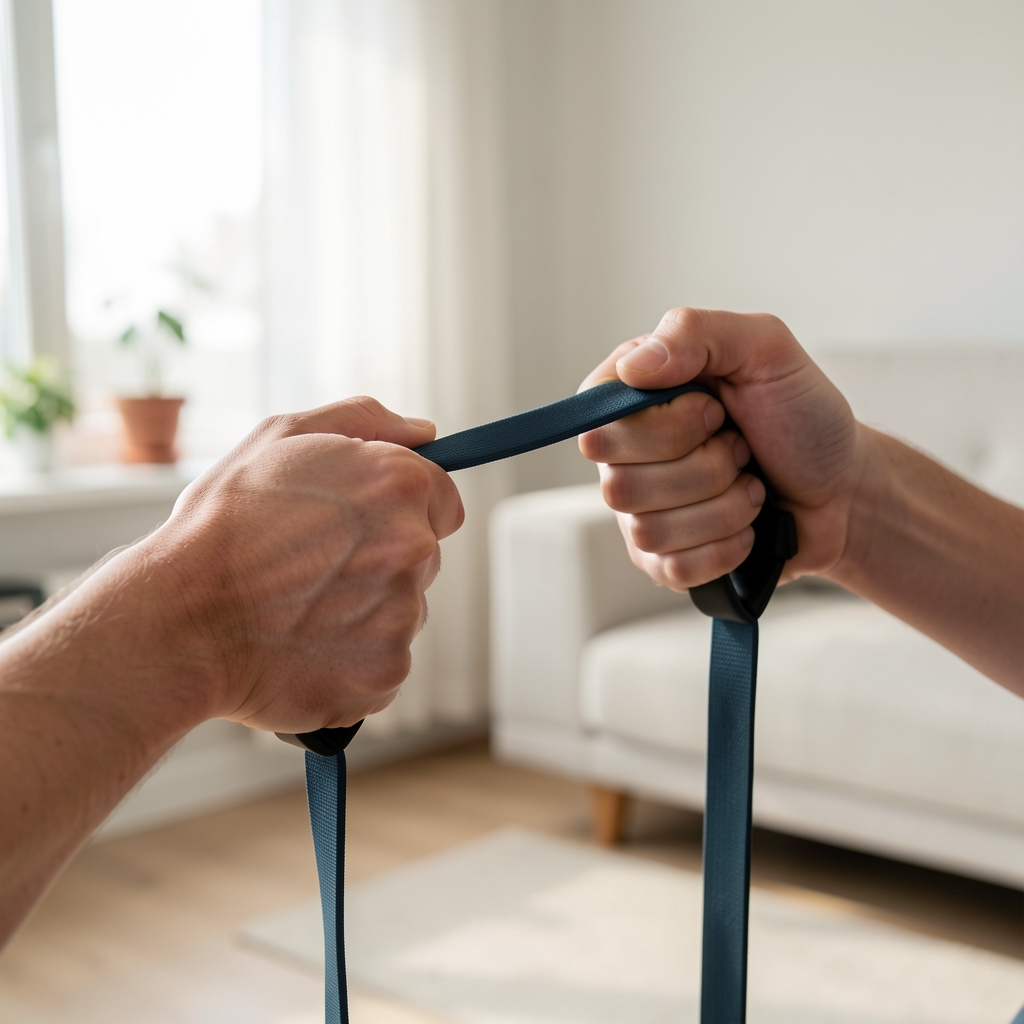
Resistance calibration through loop and long bands. Variable tension applied to pulling, pressing, and hip patterns. A single set of bands replaces what many assume requires a full rack.
View ProgrammeCore Stability Training
Deep stabiliser work — planks, dead-bug variations, pallof patterns. An approach to core strength that prioritises endurance and control rather than isolated repetitions for surface appearance.
View ProgrammeFlexibility & Mobility Flow
Active and passive stretching sequenced alongside joint rotation work. Mobility sessions that restore range lost to long desk hours, without demanding the flexibility of a trained practitioner.
View ProgrammeDesk-Reset Protocols
Short sequences built for those who spend the working day seated. Hip flexor engagement, thoracic extension, and neck-release patterns that return postural alignment without a lengthy session.
View Programme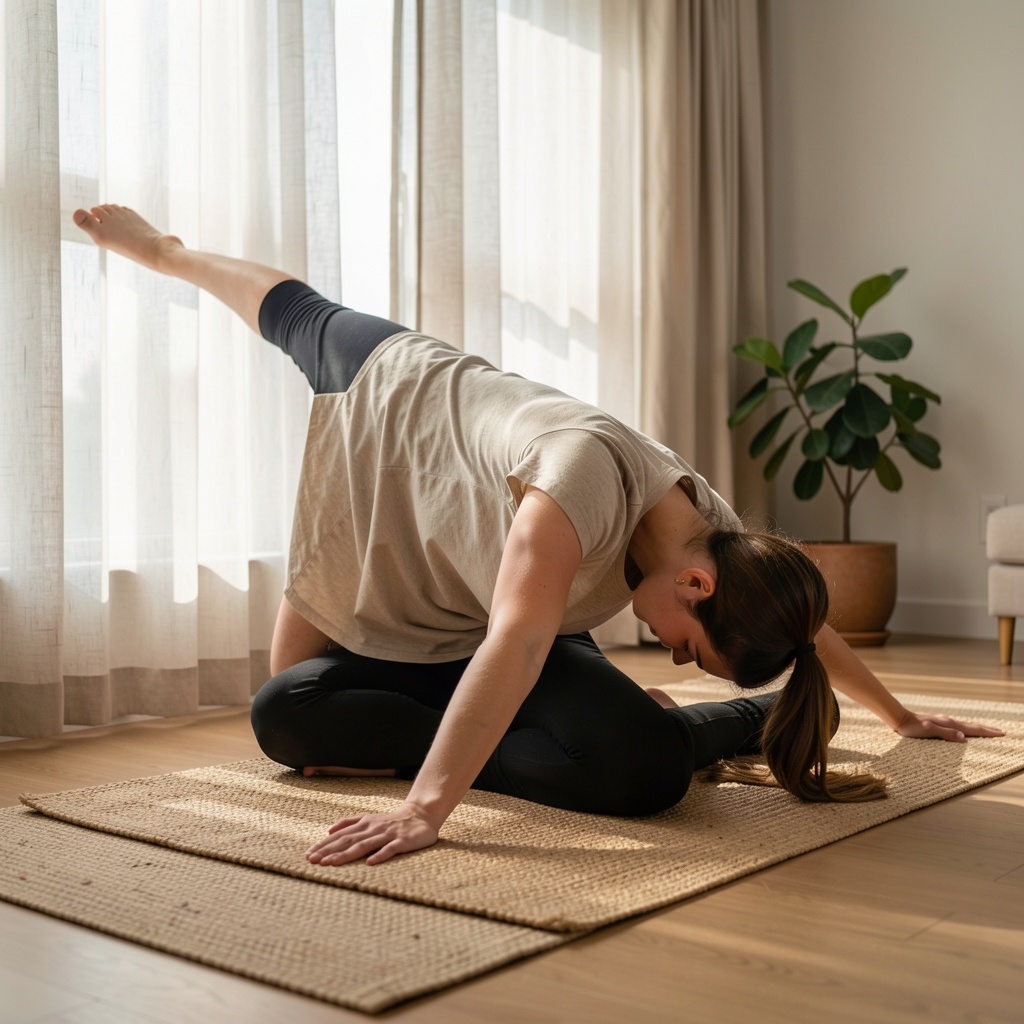
There is a quiet logic to how the body needs to move across a day.
For much of the twentieth century, exercise was organised around the gym — a dedicated space with dedicated time. What Eldan takes seriously is a different proposition: that the home, used thoughtfully, contains everything necessary for a sustainable movement practice.
This is not a concession to limitation. It is an observation about how consistency actually forms. The research on daily movement frequency is unambiguous — regularity over intensity, proximity over perfection. A programme you can return to every morning, in the room where you already are, outperforms a programme that requires a commute you eventually skip.
Eldan structures this principle into practical sequences across six movement disciplines, each calibrated to the real constraints of a home setting: limited floor space, no specialist equipment, and the knowledge that the session must fit the morning before work begins.
The Three Stages of a Home Practice
Locate Your Starting Point
Every programme begins with an honest reading of current movement capacity. Eldan's beginner guide walks through a self-assessment of mobility, stability, and strength baseline — not to rank, but to select the right starting tier within each discipline.
Build a Weekly Pattern
Combining disciplines is part of the structure, not an afterthought. Eldan outlines weekly movement templates that integrate two or three disciplines without overcrowding the schedule — typically four sessions of twenty to forty minutes each.
Sustain the Practice
The question of how to sustain a movement habit is as important as the movement itself. Eldan includes notes on session scheduling, workout consistency, recovery windows, and how to return after a break without the friction that typically ends a routine.

Questions About Home Fitness
A selection of the most common questions about building a consistent movement practice at home, answered with the straightforwardness the subject deserves.
Ask a QuestionBodyweight progression is a well-documented approach to functional strength. By managing leverage, tempo control, and movement complexity — rather than simply adding external load — the body encounters genuine challenge at every stage. Push-up variations alone span beginner to advanced when the movement parameters are understood.
Most Eldan programmes are designed for a space the size of a single yoga mat, approximately 60 x 180 cm. Movements are selected and sequenced to avoid wide lateral travel. The sessions have been tested in typical London flat dimensions — the space constraint is a design parameter, not an afterthought.
The desk-reset protocols are the recommended starting point. They address the specific postural patterns accumulated through prolonged seated work — shortened hip flexors, restricted thoracic mobility, compressed cervical posture. Ten minutes each morning before the working day begins produces a measurable shift in how the body carries itself across the hours that follow.
The movement frequency research consistently points to daily light engagement over less frequent intense sessions. Eldan's weekly templates are built around four structured sessions supplemented by two or three shorter mobility or desk-reset sequences. The total weekly time investment is typically three to four hours, distributed in manageable fragments.
Eldan is a practice framework rather than a content platform. The programmes are written rather than filmed, designed to be read and internalised rather than followed in real time. This inverts the dependency: the goal is that you eventually know the movement well enough that you no longer need to watch someone else perform it before you begin.
A programme that fits the morning before work begins.
Browse the full range of home movement programmes, from no-equipment bodyweight circuits to targeted desk-worker recovery sequences. Each one was written to be returned to, morning after morning.